 Follow
 @SuncoastTools
Follow
Follow @SuncoastTools

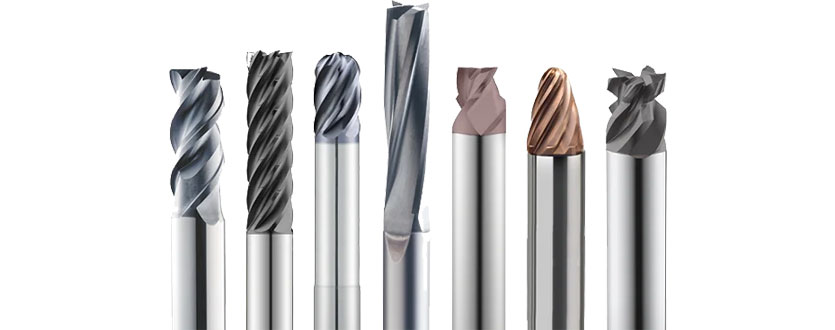
SGS End Mills for Roughing, Finishing & Precision Milling
Compare KYOCERA SGS carbide end mills and routers for metalworking, small-feature machining and composite applications. Explore Z-Carb performance tools, S-Carb aluminum milling families, general-purpose roughers and finishers, micro end mills and specialty profiles. Select the work material and operation first, then compare end geometry, dimensions, flute count, coating and coolant options.
Z-Carb Performance Milling
Compare Z-Carb families for the machining strategy you plan to use. Z-Carb AP focuses on chatter control; five-flute HPR tools serve roughing applications; XPR is designed for plunging, ramping and helical interpolation. Review the selected end mill's material guidance, end geometry and coating before applying cutting parameters.
S-Carb & Ski-Carb for Aluminum
Find S-Carb and Ski-Carb options for aluminum and compatible non-ferrous materials. S-Carb APF is a finishing family, while APR-3 and APR-4 provide roughing choices. Consider the feature, chip space and surface-finish requirement when comparing flute counts, then confirm coolant and coating details on the chosen product.
General-Purpose Roughers & Finishers
Browse carbide roughing, finishing and tapered end mills for everyday milling needs. Choose the end style for the feature and compare cutting diameter, length of cut and shank size. Check the series' material application and coating; general-purpose tooling still needs to be matched to the workpiece and operation.
Micro End Mills for Small Features
SGS micro end mills include two-, three- and four-flute families with square, ball-nose and corner-radius options. Compare the cutting size with the feature, then check flute length, reach and shank dimensions. Review the selected series for material suitability and use the micro catalog for detailed dimensional information.
High-Efficiency & Finish Milling
H-Carb and T-Carb offer options for specified high-efficiency and trochoidal milling applications. Multi-Carb, V-Carb and Series 7 provide additional finishing choices. Compare flute geometry and reach with the machining strategy; toolholding, part access and the finish requirement all affect which family belongs in the process.
Composite, Wood & Plastic Routers
Compare 20-CCR and 31-CCR carbon-composite routers, Series 25 compression routers, and Series 21 up-cut or Series 22 down-cut designs. Match the router to the material, cutting direction and edge requirement. Check the individual product for diameter, flute length, shank and coating information.
Mold, Die & Contoured-Surface Milling
Compare Z-Carb MD for mold-and-die materials, Power-Carb for designated hardened-steel applications, and Turbo-Carb ball end mills for contoured features. Circle-segment barrel cutters offer another profile to review for suitable finishing toolpaths. Check the specific series' hardness range, geometry and programming requirements.
Stainless Steel & High-Temperature Alloys
Z-Carb HTA targets high-temperature-alloy milling, while Series 33 provides a three-flute option for listed ramping and slotting applications. Compare the alloy and operation with the series guidance, then check coating, cutting length and chip-clearance requirements. Use the selected tool's recommendations for the starting cutting conditions.
Specialty Materials & Profile Tools
For compatible plastics and composites, compare the slow-helix Series 27 family with the router designs above. The Armory category provides dedicated Picatinny rail tooling when the part calls for those profiles. Select by the actual feature and material, and confirm cutter geometry before choosing the part number.
KYOCERA SGS Carbide End Mills & Routers: Selection Questions
- How do Z-Carb AP, HPR and XPR differ?
- Z-Carb AP emphasizes chatter-control geometry, HPR is a five-flute roughing family, and XPR is designed for plunging, ramping and helical interpolation. Choose by the actual operation and check the application range and dimensions for the individual tool.
- Which SGS end mills should I compare for aluminum?
- Start with S-Carb and Ski-Carb. Within the advanced-productivity range, APF is a finishing option and APR-3/APR-4 are roughing families. Review flute count, geometry, coating and coolant availability for the part number you select.
- Should I choose a square, ball-nose or corner-radius end mill?
- Use the part geometry and required corner shape to guide the choice. Square ends, rounded corners and ball profiles machine different features. Compare the specified radius and cutting dimensions with the drawing and programmed toolpath.
- Does a higher flute count always mean a better tool?
- No. Flute count changes the balance of cutting edges and chip space. The suitable choice depends on material, engagement, toolpath and chip evacuation. Compare families designed for the operation rather than selecting only by flute count.
- Can I use the same router for every composite or plastic?
- Do not assume the same geometry suits every material. Compare carbon-composite, compression, up-cut and down-cut designs with the stock and edge requirements. Follow the selected series' application information.
- Where can I compare dimensions and stock availability?
- Open the relevant category to review products and specifications, and use the interactive master or micro catalog for supporting information. Check local and factory availability on the individual Suncoast product listing before ordering.