 Follow
 @SuncoastTools
Follow
Follow @SuncoastTools

SGS Carbide Drills, Micro Drills & Hole-Finishing Tools
Shop KYOCERA SGS holemaking tools for drilling, center-hole preparation and hole finishing. Compare material-specific Hi-PerCarb drills, general-purpose carbide drills, micro drills, center drills, countersinks and reamers. Use the category links to review sizes and product specifications, then match the tool to the work material, required hole depth and finished-hole requirements.
Hi-PerCarb Performance Drills
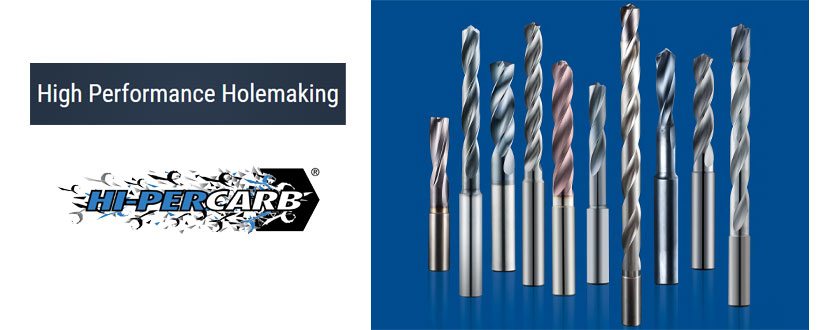
The Hi-PerCarb range includes Series 142P for steel, 143M-S for stainless and heat-resistant alloys, 141K for cast iron, and 131N for aluminum. Series 135 is a universal option for a broader application range. Compare the recommended material, drill depth and coolant design for the particular part number.
General-Purpose Carbide Drills
Compare jobber and stub-length carbide drills for routine holemaking. This range includes Series 101 two-flute jobber drills, Series 108 two-flute stub drills, Series 106 straight-flute drills and Series 103 three-flute options. Check the listed inch or metric dimensions, flute length and material suitability rather than selecting by diameter alone.
Micro Drills & Common Shanks
Explore M105 and M226 micro-drill families, M155 inverse-diameter tools and M814 coolant-through micro drills. Compare cutting diameter, flute length and shank size with your small-hole application and holder. Review the catalog's drilling guidance for the selected series, especially when reach, chip evacuation or coolant delivery constrains the process.
Carbide Center Drills
Combined drills and countersinks produce the specified center-hole form. Compare fractional and metric SGS center drills using the small drill diameter, body diameter and overall length. Confirm the required geometry against the drawing; a center drill and a spot drill should not be assumed to serve the same purpose.
Carbide Countersinks
Browse one-, three- and six-flute countersinks for the required countersinking operation. The range includes multiple included angles, so match the cutter to the drawing or fastener requirement before comparing diameter and flute count. Check shank size, access and the product's application information when choosing the tool.
Carbide Reamers
Use the SGS straight-shank carbide reamer category to compare tools for finishing a prepared hole. Select the reamer diameter around the specified finished hole and review the tool information for the material and process. Check the prepared-hole allowance and cutting recommendations before planning the finishing operation.
Flat-Bottom Drilling with 136U / 146U
Series 136U and 146U provide flat-bottom drill choices, with coolant options varying by tool. Review these families when the feature calls for flat-bottom geometry. Confirm the operation is supported by the selected drill, then check usable depth, diameter, entry conditions and the manufacturer's application notes.
Series 120 Drills for Composites
SGS Series 120 is designed for CFRP drilling, with a diamond-coated option represented in the Suncoast category. Composite holemaking places particular demands on entry and exit quality. Match the specific tool to the laminate and hole requirements, and review its application guidance before setting the process.
Confirm Size, Depth & Coolant Requirements
Check whether dimensions are inch or metric, then compare cutting diameter, flute length, shank size and overall length. Review coolant-through availability, point geometry and the series' recommended work materials. Use the interactive catalogs to confirm the tool selection; use the individual product listing for current local and factory availability.
KYOCERA SGS Drills & Holemaking Tools: Selection Questions
- What is the difference between general-purpose and Hi-PerCarb drills?
- General-purpose families provide options for routine drilling. Hi-PerCarb includes more specialized geometries for particular materials and applications, alongside the universal Series 135. Choose by the operation and material rather than assuming every performance drill fits every job.
- Which family should I compare for stainless steel?
- Hi-PerCarb Series 143M-S is designed for stainless steel and heat-resistant-alloy applications. Check the individual drill's material guidance, dimensions, coating and coolant requirements against your workpiece and machine.
- Are micro drills available with coolant-through capability?
- The M814 category includes coolant-through micro drills. Other micro-drill families have different designs and shank sizes, so check the selected part number instead of assuming coolant-through capability applies to the full micro range.
- When should I consider a flat-bottom drill?
- Compare Series 136U/146U when the required feature or operation calls for flat-bottom geometry. Confirm the specific entry conditions and operation in the manufacturer's guidance; a conventional pointed drill produces a different hole-bottom shape.
- How do I select a countersink angle?
- Use the included angle specified on the drawing or required by the fastener. Then compare cutter diameter, flute count, shank and application. The SGS category groups the available countersinks so those specifications can be reviewed together.
- Do I need a reamer after drilling?
- That depends on the finished-hole tolerance, surface finish and process capability. A reamer is a finishing tool for a prepared hole, not a substitute for the initial drilling operation. Review the selected tool's recommended preparation and cutting conditions.