 Follow
 @SuncoastTools
Follow
Follow @SuncoastTools

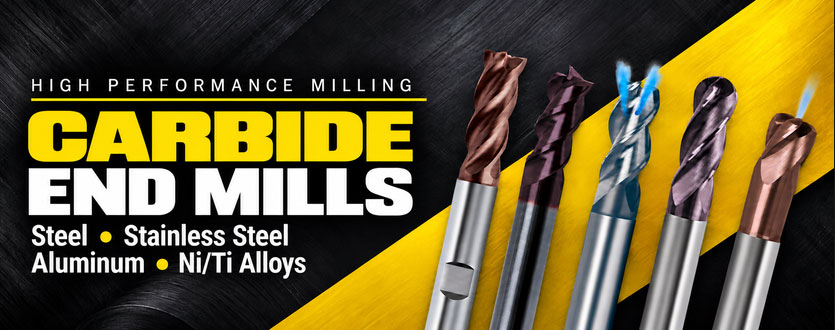
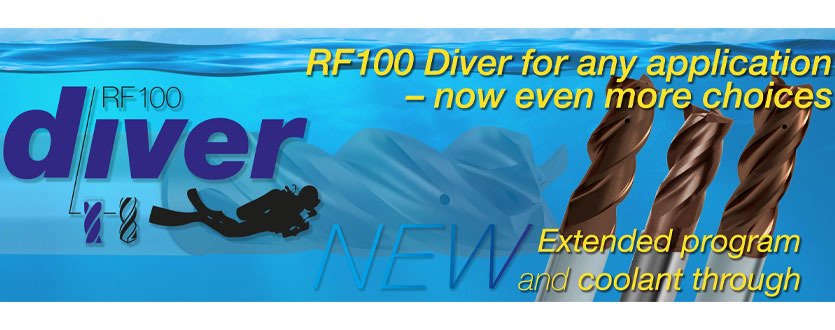


Guhring Carbide End Mills for CNC Milling
Shop Guhring carbide end mills for slotting, profiling, roughing, finishing and application-specific milling. Compare RF 100 and Diver tools, Alumi-Tech aluminum end mills, Uni-Pro designs and specialty cutters. Start with the work material and toolpath, then match diameter, length of cut, flute count, end geometry, reach and coating to the part and machine setup.
RF 100 & RF 100 Diver End Mills
The RF 100 range includes application-specific families such as Speed, Sharp, AL, Ti, U and VA. RF 100 Diver combines milling capabilities with drilling and ramping options on specified tools. Check the exact design's permitted operations, ramp limits and coolant configuration; not every RF 100 tool shares the same geometry or capabilities.
Alumi-Tech & Aluminum Milling
Compare Alumi-Tech GA 200 A, RF 100 AL and Alu RF 100 AL roughing tools for suitable aluminum applications. Chip space, flute geometry and edge finish matter when controlling built-up material. Choose the specified coating or uncoated option for the alloy, then verify the flute count and cutting style for slotting, profiling or roughing.
Uni-Pro & SelectMill Tools
Uni-Pro offers general-purpose carbide end mills in multiple flute counts and end geometries. SelectMill includes Universal, Aluminum, HPC and Roughing groups. Compare the actual series, cutting diameter, end style and application rather than treating every general-purpose tool as suitable for the same material or toolpath.
Aero-Rough & Rough-Tech End Mills
Aero-Rough and Rough-Tech families provide roughing options with different geometries, flute counts and application ranges. Select the design for the work material, available spindle power and engagement strategy. Compare radial and axial cutting conditions with Guhring's recommendations, and leave a planned finishing allowance when the part requires one.
G-Mold, Finish-Tech & Profile Milling
For finishing and contoured features, compare G-Mold and G-Mold Micro tools, Finish-Tech end mills, GA 200 A ball-nose designs, GF 300 and GF 500 tools, and Type N full-radius styles. Match the end geometry and reach to the part profile while keeping tool projection as short as the job allows.
Chamfer, Radius & Slotting Cutters
Complete edge and slot features with SpyroTec chamfer mills, standard chamfer mills, front/back deburring mills, corner-rounding end mills and solid carbide slotting cutters. Check the included angle, corner radius or slot width as applicable. Corner-rounding and slotting tools have their own categories and dimensions to compare.
Routers, PCD & Specialty Materials
The broader milling selection includes CR 100, CR 200 and FR 100 composite routers, single-flute routers and PCD end mills. Choose the cutting construction for the exact composite or nonferrous material. Review the series guidance for edge quality, chip or dust control and permissible cutting conditions instead of selecting by diameter alone.
Choose Flute Count, Reach & Cutting Strategy
Balance chip clearance, engagement and stiffness when selecting the tool. Compare standard end mills with HF 300 high-feed designs and smaller tools such as Micro Diver where appropriate. Use the required cutting length and reach, check holder clearance, and confirm that the cutter supports the planned entry and toolpath.
Match Coating & Series to the Material
Coatings and edge designs are selected as part of a complete tool system. For example, specified RF 100 Diver tools use Signum, but that does not make all coated end mills equivalent. Compare the exact alloy, hardness, coolant conditions and series recommendations. Use the catalog cutting data as a starting point for the supported operation.
Guhring Carbide End Mills: Selection Questions
- What is RF 100 Diver designed to do?
- Guhring identifies RF 100 Diver as a family for multiple operations including drilling, ramping, slotting, roughing and finishing. Check the selected tool's drawing and operating limits because size, geometry and coolant options vary by series.
- Which Guhring end mill families should I compare for aluminum?
- Alumi-Tech, RF 100 AL and Alu RF 100 AL roughing tools are useful starting points. Choose the exact series for the alloy and operation, then compare cutting length, flute count, edge geometry and coolant requirements.
- What is the difference between ball nose and corner radius?
- A ball-nose end has a rounded profile across the cutting diameter for contoured surfaces. A corner-radius tool retains a flatter end with radiused corners. Match the geometry to the drawing and toolpath rather than substituting one for the other.
- Does a higher flute count always give better results?
- No. Flute count affects chip space, cutting-edge engagement and the feed strategy. Material, radial engagement and operation determine whether fewer or more flutes are appropriate. Use the recommendations for the selected tool.
- How do I choose an end mill for mold or die work?
- Start with the workpiece hardness, smallest feature radius and required surface finish. Compare G-Mold and other suitable finishing or profile-milling series, checking reach, neck clearance, coating and the supported hardness range.
- What dimensions should I confirm before ordering?
- Check cutting diameter, length of cut, overall length, shank diameter, reach, neck clearance and end style. For specialty tools, also confirm slot width, included angle or corner radius. Review the exact part number and current availability.